
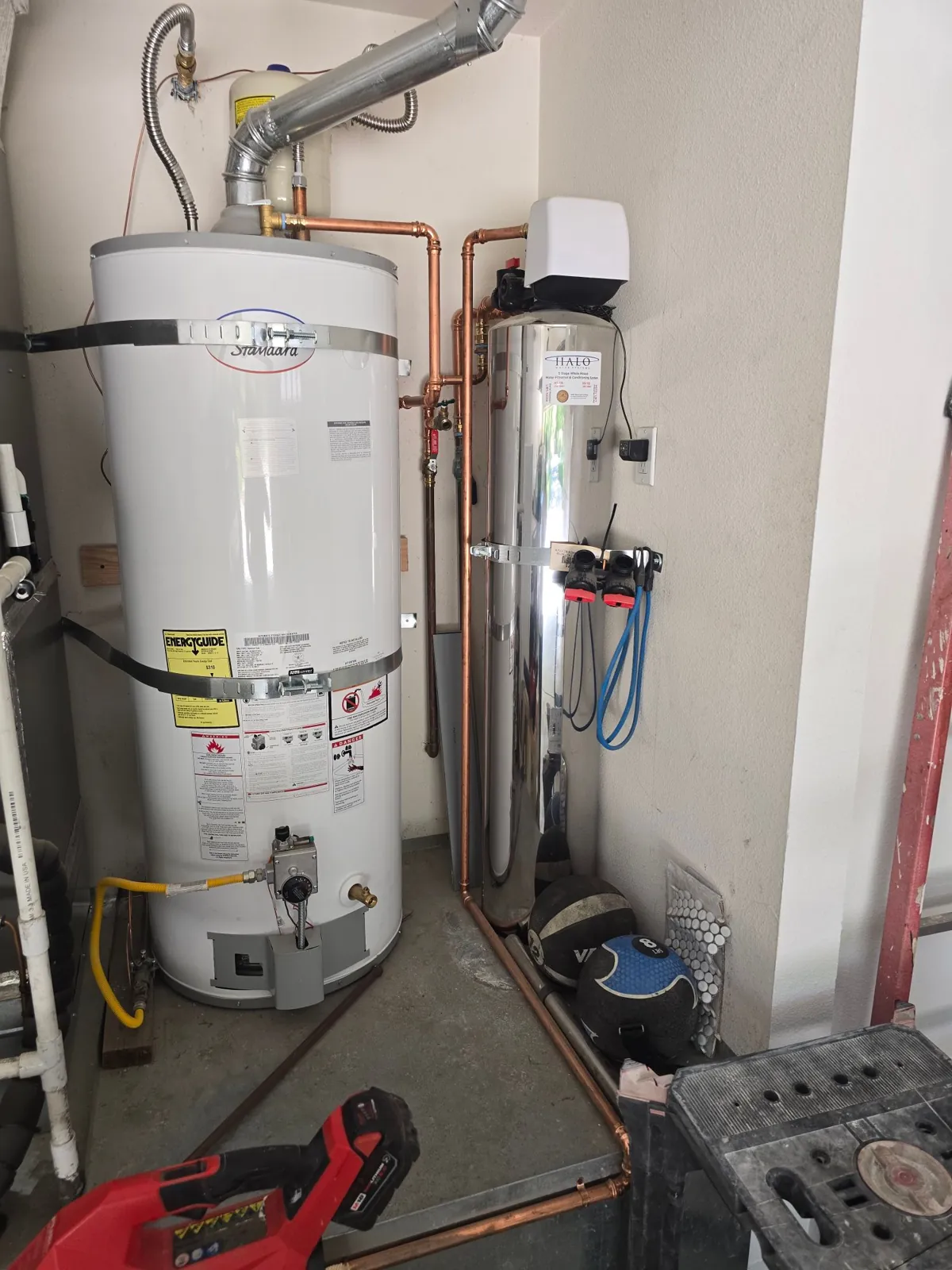
Tank Water Heater Installation
A new water heater, sized right and installed to code
A water heater replacement is a good time to get things right. The new heater should be sized for how your household actually uses hot water, connected properly, and installed with the safety equipment the code requires — not simply dropped in where the old one stood.
We help you choose between gas and electric and pick the right capacity, then handle the full installation: draining and disconnecting the old heater, making new water and fuel connections, venting gas units correctly, and adding the seismic strapping California requires for water heaters.
Before we leave, we fill and fire up the new heater, test the connections and the relief valve, and show you the shut-offs. Every installation starts with a free estimate.
Installation at a glance
- Gas and electric tank water heaters
- Sized to your household's hot water use
- Seismic strapping and code-required safety equipment
- Tested and started up before we leave
- Free estimate before any work begins
Time to replace?
Signs it's time for a new water heater
A repair can buy time, but these signs usually mean replacement is the better investment.
- 01
It's 10 years old or more
Many tank heaters last roughly 8 to 12 years. Past that point, failure is a question of when.
- 02
The tank is leaking
Water seeping from the tank itself — not a valve or fitting — means the tank has corroded through.
- 03
Rusty hot water
Discoloration on the hot side only often means the inside of the tank is rusting.
- 04
Repairs keep adding up
When one repair follows another, the money is usually better spent on a new heater.
- 05
Not enough hot water anymore
A growing household, or a tank full of sediment, can leave the heater unable to keep up.
- 06
Loud rumbling and rising energy bills
Heavy sediment makes the heater work harder and louder, using more energy for less hot water.
Choosing a heater
Choosing the right tank water heater
The right heater depends on your household, your home and how you heat it. We'll walk you through each choice.
Gas or electric
Gas heaters usually recover faster and cost less to run where gas is available; electric heaters avoid venting and gas lines. We'll match the fuel to your home.
Tank size and recovery
Capacity in gallons and the heater's first-hour rating decide how much hot water you get at busy times. We size it to your household, not just to the old unit.
Energy efficiency
The yellow EnergyGuide label shows estimated yearly running costs, so you can compare models on more than the purchase price.
Space and venting
Taller or wider tanks need room to fit, and gas models need proper venting. We check both before recommending a model.
Tank or tankless
If you want endless hot water or need to free up space, a tankless water heater may be the better fit — we install both.
What's included
What a professional installation includes
A water heater is a gas or electric appliance under pressure. Every step below is part of doing it safely and to code.
- 01
Sizing and selection
We recommend the right fuel type, capacity and model for your household and space.
- 02
Old heater drained and disconnected
The existing heater is shut down, drained and safely disconnected from water and fuel.
- 03
New water and fuel connections
New supply connections, plus gas connections or electrical hookup, made properly and checked for leaks.
- 04
Venting and relief valve
Gas units vented correctly, and the temperature and pressure relief valve piped to discharge safely.
- 05
Seismic straps and expansion tank
Seismic strapping as California requires, plus a thermal expansion tank where the system needs one.
- 06
Start-up and testing
We fill the tank, start the heater, set the temperature and test every connection before we go.
Pricing
How much does water heater installation cost?
A like-for-like replacement in the same spot is the most straightforward job. Costs rise when the fuel type changes, the heater moves to a new location, or the existing setup needs updating to meet current code.
We look at your current setup, recommend the right heater and give you a free estimate with the full scope before any work begins.
What affects the price
- Gas or electric, and the tank size
- Like-for-like replacement or a new location
- Changes to venting, gas lines or electrical
- Code updates such as strapping or an expansion tank
- Permit and inspection requirements
How it works
Our water heater installation process
From choosing the heater to hot water at the tap.
- 1
Call or book online
Tell us about your current heater and your household's hot water needs.
- 2
Assess and size
We check the space, fuel, venting and connections and recommend the right heater.
- 3
Free estimate
You get the model, the full scope and the price before we start.
- 4
Install
Old heater out, new heater in — connected, vented, strapped and to code.
- 5
Test and walk-through
We start it up, test everything and show you the shut-offs.
Service area
Tank Water Heater Installation near you
Tank Water Heater Installation for homes and businesses across the Sacramento region. Outside these cities? Call — depending on the job, we may still be able to help.
Questions & answers
Tank Water Heater Installation FAQs
How long does it take to install a new water heater?
A straightforward like-for-like replacement can often be completed in a single visit. Moving the heater, changing fuel type or updating venting and gas lines takes longer. We'll give you a timeline with your free estimate.
What size water heater do I need?
It depends on how many people live in the home, how many bathrooms you have and how much hot water you use at the same time. We look at the tank's capacity and first-hour rating together to size the heater to your household rather than simply matching the old one.
Should I choose a gas or electric water heater?
If your home has gas available, a gas water heater usually heats water faster and costs less to run. Electric heaters avoid the need for venting and a gas line. We'll recommend the best fit for your home and how you use hot water.
Do water heaters need seismic straps in California?
Yes. California requires water heaters to be braced or strapped to resist earthquake movement. Every water heater we install is strapped to meet that requirement.
Do I need an expansion tank?
If your plumbing is a closed system — for example, because of a check valve or pressure-reducing valve — water expanding as it heats has nowhere to go, and an expansion tank absorbs that pressure. Local code often requires one in that case, and we'll tell you if your system needs it.
Does a new water heater need a permit?
Water heater replacements usually require a permit and inspection from your city or county. Requirements vary by location, and we'll tell you what applies to your installation as part of the estimate.