Water Softener Installation
Softer water, sized to your home — starting with a free test
Hard water is full of dissolved calcium and magnesium. You see it as white crust on faucets and spots on glassware, but the bigger cost is hidden: scale building up inside your pipes, water heater, dishwasher and washing machine, making them work harder and wear out sooner.
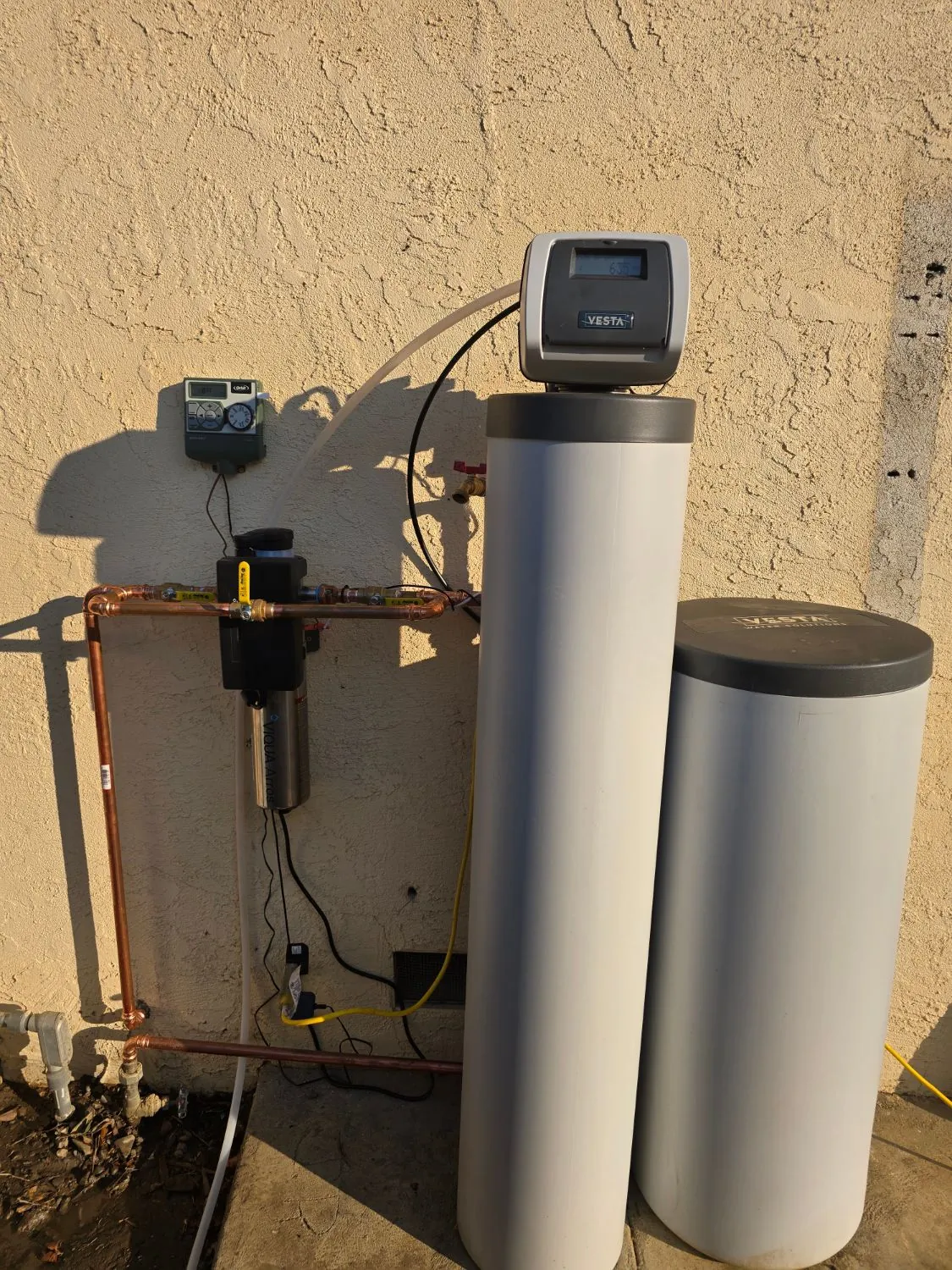
A water softener removes those minerals before the water reaches the rest of the house. We start with a free hard water test, so the softener is sized to your actual hardness and household — not guessed at. Then we install it properly, with a bypass valve, a correct drain connection and any new plumbing needed to tie it into your main line, indoors or out.
When you install a water softener with Modern Plumbing Solutions, a reverse osmosis drinking water system is included free.
Softener installation at a glance
- Free hard water test before we recommend anything
- Softener sized to your water hardness and household
- Indoor and outdoor installations
- Bypass valve and proper drain connection
- Free reverse osmosis system with your install
Warning signs
Signs you need a water softener
Hard water shows up all over the house. If several of these sound familiar, it's worth a free test.
- 01
White crust on faucets and showerheads
Mineral scale left behind wherever hard water dries — the clearest sign of all.
- 02
Spots on dishes and shower glass
Cloudy spots and film that come back no matter how often you clean.
- 03
Soap that won't lather
Hardness minerals react with soap, so you use more of it and rinse less cleanly.
- 04
Stiff laundry and dull colors
Minerals left in fabric make clothes feel rough and fade faster.
- 05
A noisy or short-lived water heater
Scale settles in the tank and on heating parts, cutting efficiency and lifespan.
- 06
Weak flow from fixtures
Scale builds up in aerators, showerheads and pipes, slowly restricting the flow.
How it works
How a water softener works
A softener is a simple, reliable system once it's sized and set up correctly.
Ion exchange
Water flows through a tank of resin beads that capture calcium and magnesium and release sodium or potassium in their place.
Regeneration
When the resin is full of minerals, the softener rinses it with brine to recharge it, then flushes the minerals down the drain.
The brine tank
The second tank holds the salt that makes the brine. Keeping it topped up is the main thing a homeowner needs to do.
Sizing by hardness and usage
Softeners are sized by how many grains of hardness they can remove between regenerations, based on your water test and household use.
The bypass valve
A bypass lets water skip the softener for service or maintenance without shutting off water to the house.
What's included
What's included in a water softener installation
Everything from the first test to soft water at the tap.
- 01
Free hard water test
We measure your water's hardness and explain the results before recommending a system.
- 02
Sizing and selection
A softener with the right capacity for your hardness, household size and water use.
- 03
Plumbing and bypass
The softener tied into your main line, with a bypass valve and new piping where your home needs it.
- 04
Drain and brine connections
A proper drain line for regeneration and the brine tank connected and filled.
- 05
Programming and start-up
The control head set for your water hardness, then the system started and tested.
- 06
Free reverse osmosis system
A reverse osmosis drinking water system included free with your softener installation.
Pricing
How much does water softener installation cost?
The cost depends on the size of softener your water and household need, and on what it takes to connect it — a home with an existing softener loop is a simpler install than one that needs new piping run to the main line.
We test your water for free, recommend the right system and give you a free estimate with the full scope. And with every softener installation, a reverse osmosis drinking water system is included at no charge.
What affects the price
- The softener's capacity for your hardness and household
- Garage, utility room or outdoor installation
- An existing softener loop or new piping to the main line
- Drain and power access at the install location
- Adding whole-house filtration at the same time
How it works
Our water softener installation process
Test first, size correctly, install cleanly.
- 1
Free hard water test
We test your water and walk you through the results.
- 2
Recommendation and estimate
The right softener for your home, with a free estimate and no pressure.
- 3
Install
Softener plumbed in with a bypass valve, drain line and any new piping needed.
- 4
Program and start up
We set the control for your hardness, start the system and test the water.
- 5
Show you the ropes
How to add salt, use the bypass and know when it needs attention.
Service area
Water Softener Installation near you
Water Softener Installation for homes and businesses across the Sacramento region. Outside these cities? Call — depending on the job, we may still be able to help.
Questions & answers
Water Softener Installation FAQs
Do I need a water softener?
It depends on how hard your water is, which varies across the Sacramento area by neighborhood and water source. The simplest way to know is a free hard water test — we'll show you the results and only recommend a softener if your water needs one.
How do I get a free reverse osmosis system?
When you install a water softener or a whole-house water filter with Modern Plumbing Solutions, a reverse osmosis drinking water system is included free.
What size water softener do I need?
Softeners are sized by capacity in grains, based on your water's hardness and how much water your household uses. An undersized softener regenerates too often; an oversized one wastes money. Your water test lets us size it correctly.
Will softened water taste salty?
No. A softener adds only a small amount of sodium, far below what you'd taste. If you're watching your sodium intake, you can use potassium chloride instead of salt, and the free reverse osmosis system removes most sodium from your drinking water.
Can a water softener be installed outside?
Yes. Many homes in the area have softeners installed outdoors near where the main line enters the house. We'll recommend the best location for your home, indoors or out.
How much maintenance does a water softener need?
Mostly, keeping the brine tank topped up with salt. It's also worth checking periodically that the softener is regenerating properly. If it ever stops softening, we repair water softeners too.