
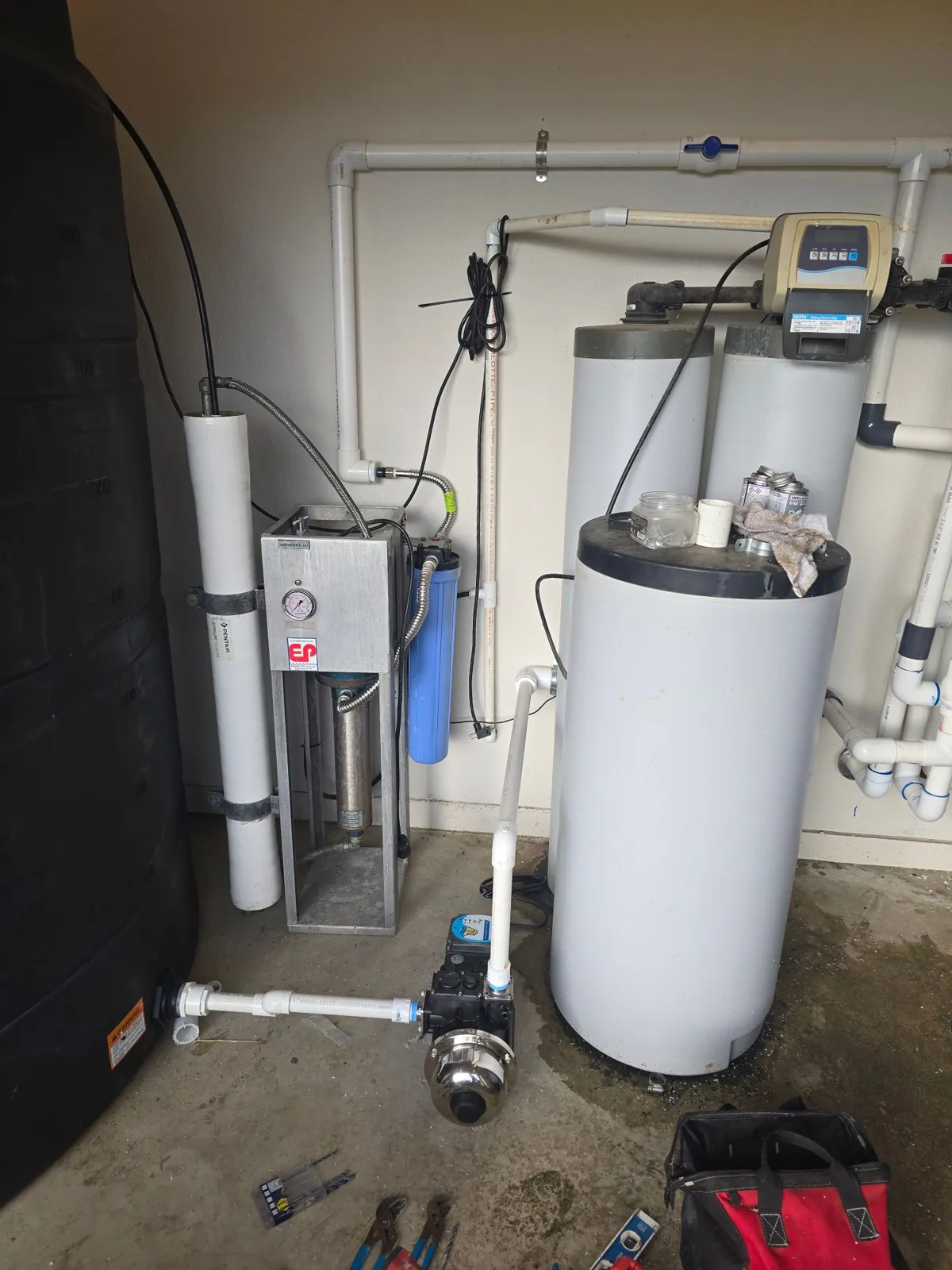
Water Softener Repair
Get your soft water back
A water softener works quietly in the background — until it doesn't. When it stops softening, the signs creep back in: spots on dishes, scale on faucets and soap that won't lather. Meanwhile, hard water is building up inside your pipes, water heater and appliances again.
Most softener problems come down to a few common causes: a salt bridge in the brine tank, a clogged injector or brine line, worn seals in the control valve, settings lost after a power outage, or resin that has reached the end of its life. We find which one it is and fix it.
After the repair, we test your water to confirm the softener is doing its job. If repair no longer makes sense, we'll tell you — and a new softener installation includes a free reverse osmosis system.
Softener repair at a glance
- Regeneration and brine draw problems
- Salt bridges and brine tank cleaning
- Control valve, seal and setting repairs
- Resin replacement for older systems
- Water retested after every repair
Warning signs
Signs your water softener needs repair
If your softener is showing any of these, it's not protecting your home the way it should.
- 01
Hard water symptoms are back
Spots, scale and poor lather mean hard water is getting past the softener.
- 02
The salt level isn't going down
Usually a salt bridge or a brine draw problem — the softener isn't using salt to regenerate.
- 03
Too much water in the brine tank
Standing water well above the salt can point to a clogged injector, brine line or valve fault.
- 04
It regenerates constantly — or never
Incorrect settings, a failing timer or a control valve problem.
- 05
Low pressure or salty-tasting water
Fouled resin, a stuck valve or a regeneration cycle that isn't rinsing properly.
- 06
Leaks, noises or error codes
Leaking fittings, a valve that won't stop cycling, or a blank or flashing display.
Common problems
What goes wrong with water softeners?
A handful of problems account for most softener repairs.
Salt bridges and salt mushing
A hard crust of salt forms in the brine tank, leaving a gap underneath so the softener can't make brine — or salt turns to sludge at the bottom.
Clogged injector or brine line
Sediment and debris block the small injector that draws brine into the resin tank during regeneration.
Worn seals and control valve parts
Seals, spacers and pistons inside the control valve wear over time, causing leaks or water bypassing the resin.
Lost settings
A power outage or a changed household can leave the softener running on the wrong time or hardness setting.
Worn-out or fouled resin
Resin beads break down with age, chlorine and iron, and eventually can't hold enough hardness to keep up.
Repairs we handle
Water softener repairs we handle
From a quick reset to a full rebuild — or an honest call that it's time for a new system.
- 01
Salt bridge and brine tank service
Salt bridges broken up, sludge removed and the brine tank cleaned so it makes brine again.
- 02
Injector and brine line cleaning
Blockages cleared so the softener draws brine and regenerates properly.
- 03
Control valve repair
Worn seals, spacers and pistons replaced to stop leaks and bypassing.
- 04
Resin replacement
Fresh resin for a sound tank and valve, restoring full softening capacity.
- 05
Settings and programming
Time, hardness and regeneration settings corrected for your water and household.
- 06
Replacement when it's time
When repair isn't worth it, a new softener sized to your water — with a free RO system included.
Pricing
How much does water softener repair cost?
Clearing a salt bridge or correcting the settings is a quick job; rebuilding a control valve or replacing the resin takes more time and parts. The cost depends on what's failed and the softener's age and condition.
We diagnose the problem, explain what we found and give you a free estimate before any work begins. If replacement makes more sense, we'll price that too — and a new softener installation includes a free reverse osmosis system.
What affects the price
- Which part or condition is causing the problem
- The softener's age and parts availability
- Whether the resin needs replacing
- Any leaks or water damage to address
- Repair versus replacement with a new system
How it works
Our water softener repair process
Diagnose it, fix it, then prove it with a water test.
- 1
Call or book online
Tell us what your softener is doing — or not doing.
- 2
Diagnose
We check the settings, brine tank, brine draw and a full regeneration cycle.
- 3
Free estimate
Repair or replace, with honest advice and the price up front.
- 4
Repair
We clean, rebuild, replace or reprogram whatever has failed.
- 5
Retest your water
We test the softened water to confirm the hardness is gone.
Service area
Water Softener Repair near you
Water Softener Repair for homes and businesses across the Sacramento region. Outside these cities? Call — depending on the job, we may still be able to help.
Questions & answers
Water Softener Repair FAQs
Why is my water hard again even though I have a softener?
The most common causes are a salt bridge in the brine tank, an empty salt tank, a clogged injector or brine line, incorrect settings after a power outage, or resin that's worn out. A diagnosis pinpoints which one it is.
What is a salt bridge and how do I fix it?
A salt bridge is a hard crust of salt that forms in the brine tank, leaving an empty space underneath so the softener can't make brine. You can sometimes break it up gently with a broom handle. If it keeps happening, or the softener still isn't working, call us.
Is it normal to have water in the brine tank?
Some water in the brine tank is normal for many softeners. If the water level is well above the salt, or keeps rising, it can point to a clogged injector, a brine line problem or a valve fault.
How long does a water softener last?
Many softeners last 10 to 15 years or more with regular salt and occasional service. The resin may need replacing before the rest of the system, especially with chlorinated water or high iron.
Should I repair or replace my water softener?
If the tank and control valve are in good shape, repair or a resin replacement is usually the better value. If the system is old, parts are hard to find or repairs keep adding up, replacement makes more sense — and a new softener installation includes a free reverse osmosis system.
How do I bypass my water softener?
Most softeners have a bypass valve on or near the control head. Turning it to the bypass position sends water around the softener, so you still have water while it's being repaired. If you're not sure which valve it is, call us and we'll talk you through it.