
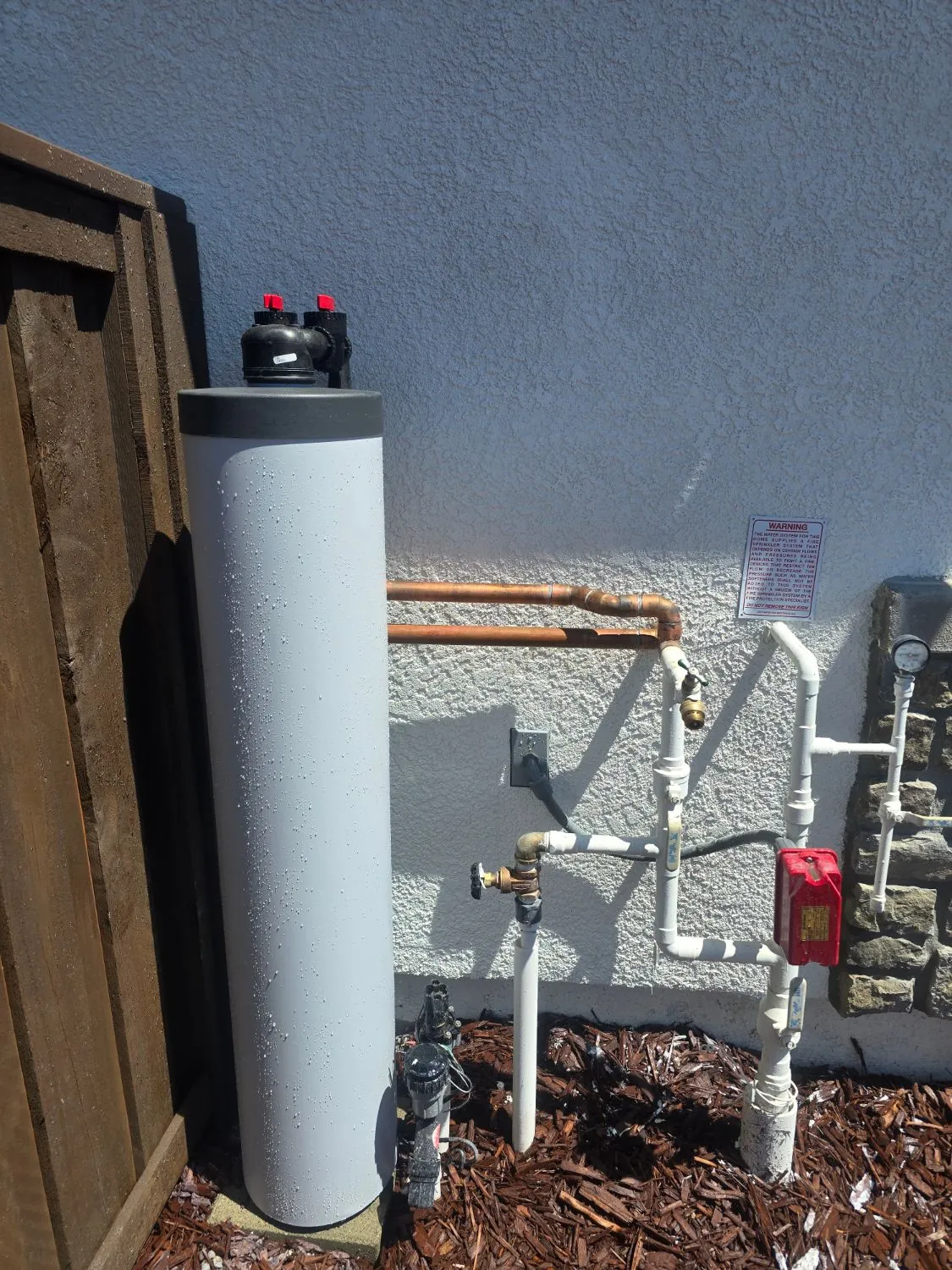
Carbon Water Filters
Fresher-tasting water with carbon filtration
Water utilities disinfect drinking water with chlorine or chloramine. It keeps the water safe on its way to your home, but it also leaves a taste and smell that many people notice in a glass of water, a cup of coffee and a hot shower.
Activated carbon is one of the most effective ways to reduce it. As water passes through the carbon, chlorine and many taste- and odor-causing compounds stick to its surface and stay behind. The result is cleaner-tasting water — while the minerals stay in.
We install carbon filtration for the whole house or just the kitchen sink, matched to your water test. And when you install a whole-house filter with us, a reverse osmosis drinking water system is included free.
Carbon filters at a glance
- Whole-house carbon filtration systems
- Catalytic carbon for chloramine-treated water
- Under-sink carbon filters for the kitchen
- Paired with softeners and sediment filters
- Free reverse osmosis with a whole-house install
Signs it would help
Signs a carbon water filter would help
If any of these sound familiar, carbon filtration is usually the first thing we'd look at.
- 01
Your water tastes like chlorine
The most common complaint about treated city water — and exactly what carbon is best at reducing.
- 02
You smell chlorine in the shower
Hot water releases chlorine into the air. A whole-house carbon filter treats the shower too.
- 03
Earthy or musty tastes
Organic taste and odor compounds are reduced by activated carbon.
- 04
You buy bottled water for the taste
Carbon-filtered tap water often tastes good enough to replace it.
- 05
Softened water still tastes off
A softener removes hardness, not chlorine. Carbon handles the taste and smell.
- 06
Coffee and tea taste flat
Chlorine affects the flavor of everything you make with tap water.
How carbon works
How carbon water filters work
Carbon filters work by adsorption, and the type of carbon decides what they're best at.
Adsorption
Activated carbon has a huge internal surface area. Chlorine and many organic compounds bind to that surface as water flows through.
Granular activated carbon
Loose carbon granules in a whole-house tank or cartridge — well suited to reducing chlorine, taste and odor at high flow.
Catalytic carbon
Specially processed carbon that's more effective on chloramine, which some utilities use instead of chlorine.
Carbon block
Carbon compressed into a solid block for finer filtration in under-sink and point-of-use filters.
Contact time and sizing
Carbon works best when water spends enough time in contact with it, so whole-house systems are sized to your home's flow.
Our carbon systems
Carbon filtration systems we install
From the whole house to a single tap, matched to your water and your home.
- 01
Whole-house carbon filters
Carbon filtration on the main line, so every faucet, shower and appliance gets better-tasting water.
- 02
Catalytic carbon systems
For homes on chloramine-treated water, where standard carbon is less effective.
- 03
Carbon with a sediment pre-filter
A sediment stage ahead of the carbon catches grit and helps the carbon last longer.
- 04
Carbon and softener combinations
Carbon for taste and smell, a softener for hardness — installed together when your water needs both.
- 05
Under-sink carbon filters
Carbon block filters for drinking and cooking water at the kitchen sink.
- 06
Media and cartridge replacement
Carbon media and cartridges replaced on schedule to keep the filtration working.
Pricing
How much does a carbon water filter cost?
An under-sink carbon filter is a small, affordable upgrade; a whole-house carbon system costs more but treats every tap in the home. The type of carbon, the size of the system and whether it's paired with a softener or sediment filter all affect the price.
We test your water for free, recommend the right carbon setup and give you a free estimate that includes ongoing media or cartridge costs. With a whole-house filter install, a reverse osmosis system is included free.
What affects the price
- Whole-house system or an under-sink filter
- Standard or catalytic carbon
- System size for your home's flow
- Adding a sediment pre-filter or a softener
- How often the carbon needs replacing
How it works
Our carbon filter installation process
Tested, sized and installed for easy upkeep.
- 1
Free water test
We test your water and talk through the taste and smell you're noticing.
- 2
Recommend and estimate
The right carbon type and system size, with a free estimate.
- 3
Install
Whole-house systems on the main line with a bypass valve, or a filter under the sink.
- 4
Flush and start up
New carbon is flushed to clear fine particles before use.
- 5
Replacement schedule
You get a clear schedule for carbon media or cartridge changes.
Service area
Carbon Water Filters near you
Carbon Water Filters for homes and businesses across the Sacramento region. Outside these cities? Call — depending on the job, we may still be able to help.
Questions & answers
Carbon Water Filters FAQs
What does a carbon water filter remove?
Activated carbon is best known for reducing chlorine and the taste and odor compounds that make water unpleasant. Depending on the filter and its certification, it can also reduce certain organic chemicals — we'll go over exactly what your system is rated for.
Does a carbon filter soften water?
No. Carbon doesn't remove the calcium and magnesium that make water hard. If you have hard water, a water softener handles that, and many homes use carbon and a softener together.
What's the difference between chlorine and chloramine?
Both are disinfectants utilities add to drinking water. Chloramine is more stable and harder for standard carbon to remove, so homes on chloramine-treated water are better served by catalytic carbon.
How often does carbon need to be replaced?
It depends on the system and how much water you use. Under-sink carbon cartridges are replaced more often than the media in a whole-house carbon tank. We'll give you a schedule for your system at install.
Does carbon filtration remove minerals?
No. Carbon reduces chlorine, taste and odor but leaves minerals like calcium and magnesium in the water. If you want those reduced for drinking water, reverse osmosis is the next step.
Do I get a free reverse osmosis system with a carbon filter?
Yes, when it's a whole-house filter. A reverse osmosis drinking water system is included free with any whole-house water filter or water softener installation.